
Private Coaching Versus Masterclasses: What Drives Growth?


There is a familiar theater to the conservatory masterclass: an auditorium of watchful peers, an internationally renowned guest artist pacing the stage, and a nervous student performing an intricate piece.
The guest stops the performer twelve bars in, delivers a poetic metaphor about the phrase feeling like "sunlight filtering through autumn leaves," and coaxes out an inspired thirty-second adjustment. The crowd applauds, the student bows, and the next performer walks up.
Fast forward to Tuesday morning in a solitary practice room.
When that same student sits down to practice, the magic has evaporated. The left hand still freezes during the tempo change, the vocal transition into the bridge still strains, and the student realizes that while they received a memorable moment of public inspiration, their fundamental muscle coordination remained completely untouched.
When evaluating private coaching versus masterclasses, musicians often treat them as interchangeable flavors of advanced education. In reality, they operate on completely different neurological and mechanical levels.
Understanding the boundary between broad artistic exposure and targeted technical intervention is the single most critical decision you can make for your weekly practice routine.
1. Private Coaching Versus Masterclasses: The Architectural Divide
The central difference between these formats is not merely group size—it is the difference between diagnostic intervention and artistic commentary.
A masterclass is an exhibition. The instructor’s job is to entertain and educate an entire room, balancing feedback so that seventy spectators stay engaged. Private coaching, by contrast, is a dedicated biomechanical laboratory where the entire session halts the split-second a coordination error takes place.
Pedagogical Feature | Private One-on-One Coaching | The Masterclass Setting |
Primary Objective | Isolating mechanical bottlenecks; rebuilding neuromuscular pathways. | High-level interpretive critique; stage presence; performance exposure. |
Pacing & Control | 100% driven by the student's personal rate of acquisition and vocal/instrumental stamina. | Dictated by the event schedule; time is divided among multiple performers. |
Diagnostic Depth | Millimeter-level auditing of posture, tongue root, pick angle, or wrist alignment. | Broad, macro-level suggestions ("more energy," "breathe deeper," "color the phrase"). |
Long-Term Continuity | Continuous weekly accountability; exercises evolve based on previous practice logs. | Standalone snapshot; zero follow-up to confirm whether adjustments hold up over time. |
Psychological Safety | Private, low-stakes environment allowing vulnerability, experimentation, and mistakes. | Public, high-stakes evaluation in front of peers, teachers, and spectators. |
2. The Neuromuscular Reality: Why Broad Advice Fails Technique
Every musical action—whether thinning the vocal folds for a high mix note, coordinating an alternate-picking run on guitar, or executing a thumb-under passage on piano—relies on motor pathways mapped into the brain through deliberate repetition.
When an instructor in a masterclass tells a vocalist to "sing from your soul" or tells a pianist to "make the melody sing more," they are describing an aesthetic target. They are not explaining the kinetic sequence required to achieve it.
Without targeted technical instruction, musicians routinely react to broad advice by introducing muscular tension:
A singer told to "project to the back row" typically blasts excess breath pressure, triggering laryngeal constriction and the strain detailed in our guide on why singers strain.
A guitarist instructed to "play with more passion" often squeezes the neck with excessive grip pressure, stiffening the forearm tendons.
A pianist told to "play more lyrically" may over-rely on the sustain pedal, muddying the acoustic harmony rather than developing true finger-weight voicing.
Private instruction strips away poetic ambiguity. A certified instructor does not tell you to "relax"—they audit your physical setup, identify which muscle group is over-compensating, and prescribe targeted, semi-occluded or isolated drills to release the tension at its source.
Understanding how structured one-on-one attention accelerates progress is why focused training consistently outperforms large group lectures, as explored in our comparison of private lessons versus group classes in music.
3. The Power of Continuity: Single-Event Sparks vs. Compounding Growth
The greatest limitation of a masterclass is its lack of a feedback loop.
An expert clinician might offer a brilliant technical suggestion, but without structured follow-up, the student is left alone to decipher how that suggestion fits into their daily practice.
More often than not, the student misinterprets the sensation, practices the adjustment incorrectly, and locks in a flawed compensatory habit.
Private coaching creates compounding momentum:
Week 1 (Diagnosis): The coach detects an instability—such as an elevated larynx on an ascending scale or an inefficient picking slant—and assigns two targeted micro-drills.
Independent Practice: The student applies those drills daily, logging what felt effortless and what felt resistant.
Week 2 (Calibration): The coach listens to the result. If the coordination has stabilized, the tempo increases or the skill is applied to a phrase of repertoire. If tension persisted, the exercise is modified before improper muscle memory takes root.
This unbroken chain of accountability is why sustained private study is essential when developing demanding registration techniques like Speech Level Singing (SLS), where subtle balances in vocal cord adduction dictate whether a high note feels effortless or strained.
4. Where Masterclasses Actually Earn Their Value
To dismiss masterclasses entirely would be a serious educational oversight. While they are a poor substitute for foundational technique work, they are an exceptional catalyst for advancing musicians who already possess dependable technical command.
A masterclass delivers immense educational value when used for:
Critical Listening Development: Sitting in the audience and observing a clinician diagnose another student sharpens your own analytical ear. You begin to recognize pitch drift, rhythmic drag, and physical tension in others, which dramatically accelerates your ability to self-monitor in your own practice room.
Performance Pressure Inoculation: Stepping onto a stage to play for a renowned artist in front of your peers triggers acute performance anxiety. Experiencing that adrenaline spike in a masterclass environment prepares musicians for real-world auditions, competitions, and live performances.
Stylistic & Interpretive Perspective: Once your fingers and voice do what you ask of them without physical roadblocks, working with a visiting specialist can open up new artistic horizons—offering fresh perspectives on historical phrasing, contemporary ornamentation, and dynamic stage craft.
5. Why Delivery Format Matters: The Diagnostic Virtual Studio
Decades ago, accessing top-tier private mentoring required living near a major metropolitan cultural center or traveling long distances for private studio access. Today, the virtual studio eliminates geographic barriers while providing an analytical environment that often exceeds traditional in-person lesson rooms.
At Better World Music School, our private lessons take place within digital environments engineered around virtual classroom technology for music lessons:
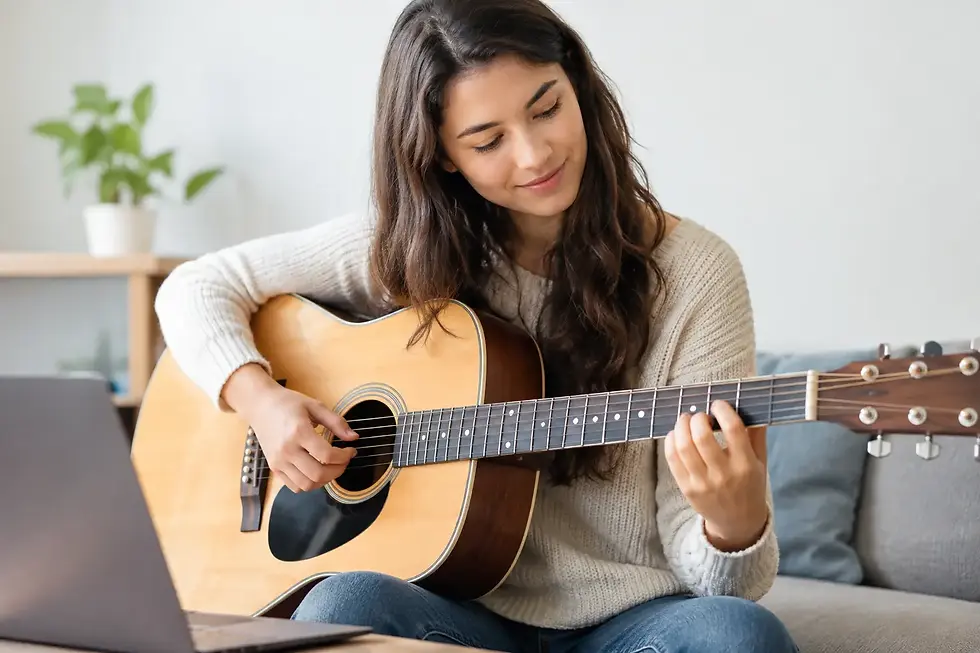
Real-Time Ergonomic Auditing: Through 4K online music lessons, instructors utilize multi-camera configurations to inspect subtle physical markers—such as micro-tensions in the jaw, finger-joint collapse on a keybed, or picking slants—from unobstructed macro angles.
Lossless, Direct-Feed Monitoring: High-resolution digital audio routes directly from instrument interfaces and reference microphones, providing pristine tonal fidelity without acoustic room flutter or compressed background gating.
Calibrating Your Daily Practice Setup: Rather than performing on an unfamiliar studio instrument, your instructor assesses your posture and mechanics on the exact instrument and home audio interface and headphone monitoring configuration you rely on every day.
To see how purpose-built virtual environments outperform traditional rooms, explore our deep dive on remote music instruction built for real progress.
6. Structuring Your Development: The Ideal Hybrid Model
The question is rarely whether you should choose private coaching or masterclasses for your entire musical journey. The question is how to balance them strategically:
[ Primary Foundation: 90% ] ──> Weekly Private Coaching
                                • Diagnostic evaluation
                                • Biomechanical correction
                                • Habit conditioning & repertoire

[ Targeted Expansion: 10% ] ──> Quarterly Masterclasses
                                • Interpretive inspiration
                                • Performance exposure
                                • Critical peer observation
Use weekly private coaching as your core engine to build, refine, and protect your physical technique. Then, treat periodic masterclasses as exciting checkpoints—opportunities to test your performance readiness, gather artistic inspiration, and expand your creative perspective.
7. Invest in Real, Measurable Musical Command
Inspiration is wonderful, but inspiration alone will not resolve a persistent vocal register break, smooth out an uneven piano passage, or clean up an awkward chord transition. Permanent musical breakthroughs come from precise, diagnostic instruction repeated until it becomes automatic.
During an initial technical assessment in our HD virtual studio:
We audit your biomechanics, posture, and technical foundation via high-resolution video feeds.
We pinpoint the exact physical and acoustic bottlenecks interrupting your fluency.
We build a customized, weekly roadmap tailored directly to your artistic goals and busy schedule.
Stop settling for generalized advice. Schedule a private intro session with Better World Music School today and experience how targeted, one-on-one coaching unlocks your true musical potential.


Comments